Wednesday, December 29, 2021

Piano Lessons

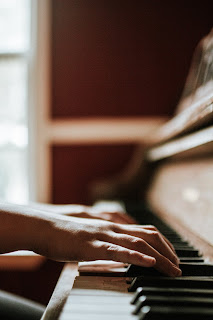
At the beginning of COVID my daughter Lucia quit piano. After two zoom lessons, she chucked it. Lucia was never a classical pianist. Her teacher taught her to play songs that she wanted to play. That meant that our house was filled with John Legend, Bruno Mars, Adele, Katy Perry, and leagues of other hip hop, pop and rock songs. Lucia would learn the music and then sing along. 

I’m completely biased but I think Lucia has an amazing singing voice. When she plays and sings our whole house takes on a magical vibration. The piano corner lights up and everything else fades into the background. Lucia is in conversation with the piano — singing along to what she plays — but she is also communicating with us. As we listen to Lucia sing, we can hear her as herself, that deep part of her being that only she knows, that only she can unleash. 

For years it’s been a running joke in our house that when Lucia plays, my partner Nancy, regardless of what she's doing at that moment, starts to cry with emotion.

When Lucia made the decision to stop lessons, I had to let her. She was fifteen at that time and ten years of lessons would have to sustain her. For the first year after she quit piano Lucia hardly played. The stand-up piano sat quietly in the corner decorated with the random assortment of beach treasures and plants, her marked-up music and yellow pencil resting, as if frozen in time, on the upper panel.

I was sad when Lucia stopped playing piano because I felt like her music was a good balance for the other parts of her life. It felt like something deeply internal, something that came from within her. It felt like she transported herself somewhere else when she played. I wanted that for her. And it transported me too. I had taken for granted all those years of hearing Lucia play and sing. During that music drought in our home, I’d occasionally ask Lucia to play, but she’s not that kind of person; she doesn’t play on demand. In fact, she actively won’t play on demand.

For a while, to fill the void of Lucia’s playing, I tried to learn piano myself. I had a few years of lessons growing up and Lucia helped me learn how to use the pedal as well as some strategies for positioning my fingers on the keys. With my ragtag collection of skills, I chose a favorite song, “Shallow” by Lady Gaga and Bradley Cooper, and learned the piano part. Once I’d mastered that I added the voice. It took me over a month of practicing to produce a crude, condensed version of the song.

I couldn’t believe how hard it was to play and sing at the same time. It felt like rubbing my stomach and patting my head at the same time while balancing a spoon on my nose. Each time I got through the song I felt exhausted and accomplished. The experience gave me a new appreciation for this talent that Lucia has mastered. I envy her ability to find a song, learn it, play it, and sing. What a gift to be able to produce that combination of sounds.

A few months ago Lucia started playing again. At random times of the day, she’d sit down and scroll through her phone to find the list of songs she keeps, and look up the chords. Within minutes she’d be playing Beyonce, Amy Winehouse, or Brandi Carlile, singing along in her beautiful voice. Oh, how I’d missed this! And at the same time, it was like no time had passed. Lucia wasn’t rusty or frustrated. She played and sang beautifully. All those years of lessons were in her. She still had it!

These days Lucia plays more regularly. Last night when she was working through a list of chores I had given her she said, “Can I just play piano for a minute, and then I’ll finish?” 

“Of course,” I said, without hesitation. The answer is always yes to the piano. If she’d asked me if she could just put on mascara and then finish her chores I would have replied with a hard NO.

During her chore break, Lucia spent some time figuring out songs on the newest Adele album. I pretended to sweep the kitchen, holding onto this moment, absorbing it with the knowledge that this could go away again. 

Lucia is seventeen now. In a few years, she’ll be out of the house and our piano will become dormant, taking on the role of a glorified plant stand again. Maybe when she comes home for visits she’ll light up the piano corner again. I hope that’s the case, but I know my days of hearing Lucia play are limited.

I wonder if Lucia will find other pianos in her future — in the lounge of her college dorm, at a friend’s house in a city far away from here, in the quiet corner of a restaurant, in the home she creates for herself one day. For my sake, and for hers, I hope so.



Friday, December 24, 2021

All Kids Lie

Photo by <a href="https://unsplash.com/@benwhitephotography?utm_source=unsplash&utm_medium=referral&utm_content=creditCopyText">Ben White</a> on <a href="https://unsplash.com/s/photos/lying?utm_source=unsplash&utm_medium=referral&utm_content=creditCopyText">Unsplash</a>

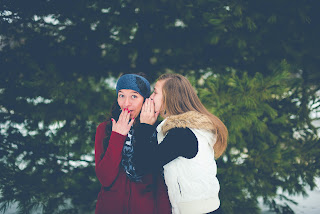
I’m fortunate to have a close-knit group of friends who all have teenage kids. I call them my Mom-Friends. Yesterday I was talking to one of my mom-friends about her kid lying to her. “All kids lie,” I said.

One of the things I ask of my teenage daughter is that she always tell me the truth. I want to know everything, even the stuff that’s bad. I want to know the ins and outs of her life so I can support her, guide her, comfort her through whatever happens in her life. But I know my daughter lies to me. She has to. 

Kids lie because they have to.

When kids are little they are perfect. They are so perfectly molded by our perfect parenting that we look at them with adoration and see everything rainbows and fairies. My mother used to tease me because I’d send her photos of my daughter sleeping. She was perfectly perfect all the time, even when she slept, especially when she slept. She was a perfect sleeper.

But as kids grow into teens and young adults they begin to self-actualize, to become who they are and not a reflection of who their parents want them to be. 

I am not proud of this, but I can see where I’ve forced my own daughter into lying. When I’m completely honest with myself I can clearly see the judgment I have of my daughter. I’m not judging her for who she’s become but because she’s changed; she’s not who she used to be. She’s not who I knew so well. 

Because I am still looking for that person — the little one who was perfectly perfect according to all of my standards of perfection — my daughter has to lie to keep my image of her intact. 

Lying is my daughter’s way of preserving her process of individuation. It’s her way of keeping me content, giving me enough of the old her to hold onto while forging ahead with her independence and autonomy. 

Maybe lying isn’t such a bad thing after all.

When I look at lying as a means of self-preservation for kids and parents, I think maybe it’s a good thing. I know my daughter doesn’t tell me everything; that often she lies by omission. But would I really want to know everything? I think I do, but I wonder if maybe it would be too much for me.

Her friends now, the people she’s forming this newfound independence and young adulthood with, know her in a fundamentally different way than I do. These friends don’t know her as she was when she was my perfectly perfect little girl. And my daughter doesn’t want them to know her that way. She wants them to know her as she is now; as the young woman she is creating. 

Occasionally my daughter and I will have a spontaneous conversation where she’ll share a lot with me. She’ll come into my office and talk about a boy she likes. If I sit there quietly with a calm expression she’ll elaborate and share details that, while inside I am clamoring for, on the outside I am completely neutral. It’s important in those moments that I monitor my reaction, that I don’t have too much of an opinion. 

Sometimes after dinner while doing the dishes my daughter will share her feelings about one of her friends. I can feel my “there’s a lesson here” mother rearing her ugly head, wanting to give my poor daughter a lecture about fairness and patience and friendship, but I quell that pollyanna and quietly listen. 

I know in those moments of sharing my daughter is not telling me everything. She’s sharing just enough to connect with me and preserve her budding sense of self. And it works. Those moments of sharing are like gas in the tank. I feel like I know my daughter a little bit more. I have the sense that she’s okay because she’s still sharing who she is with me. 

But by lying, by sharing just what she wants to share, my daughter is taking care of herself too. She’s making sure that her new path forward isn’t burdened by judgment, by the baggage of who she once was. I respect that. I remember feeling the same way when I was her age.

This process that our teenagers are going through, the process of becoming adults and separating from their childhood image, is hard work. Teens are in a perpetual state of exploration and reinvention. They are discovering who they are and that’s why they don’t tell their parents the whole truth.

Lying has such a negative connotation. We think of liars as bad, even evil, conniving and manipulative. When we use the word “lying” to describe this behavior of individuation in our kids, we’re deepening the divide, assigning a negative element to something perfectly normal and natural. 

I’m going to rename this behavior. Instead of “lying” I’m going to call this teenage privacy and information-sensoring behavior “becoming.” All that action behind the scenes that parents know nothing about is our kids becoming who they are. We’re just a small part of that process and, as hard as it is, we have no place in their inner sanctum of evolution. 

For now, our job is to stand at the sidelines and watch. At some point, maybe in a few years, maybe longer, our kids will feel ready to bring us in again. And that will feel amazing!

Saturday, December 18, 2021

Up Your Ass with Christmas

Photo by <a href="https://unsplash.com/@markusspiske?utm_source=unsplash&utm_medium=referral&utm_content=creditCopyText">Markus Spiske</a> on <a href="https://unsplash.com/s/photos/middle-finger?utm_source=unsplash&utm_medium=referral&utm_content=creditCopyText">Unsplash</a>

I’m not sure when this happened to me. I didn’t always feel this way about Christmas. I used to love it — setting up the tree, keeping lists of gifts, making cookies and toffee. But this year I truly cannot wait for the holiday to be over. I just want to move on to next year, whatever that looks like. 

When I was a kid my stepfather Al used to sing an improvised Christmas carol he wrote around the house for most of December. “Up your aaaassss with Christ-mas,” he’d bellow as he rounded the corner from the dining room to the living room where the big tree took over the front windows.

When my mom started talking about a holiday event he’d close his eyes and softly sing his tune, as if to invite in a momentary respite from the constancy of Christmas conversation.

Al was Jewish and he grew up in the Bronx. He never celebrated Christmas until he met my mom. Mom grew up in the midwest with a rich Scandanavian culture filled with beautiful Christmas traditions. She shared them all in our household and growing up I loved it. As an adult, I carried many of them into my family culture. 

We always laughed when Al sang the “Up your ass” song, but I never really understood why he felt that way.

In my house now, Christmas isn’t actually that big a deal. I’m the one who gets most excited. I decorate the tree. I bake the cookies. I prepare the holiday treat boxes to deliver to friends and neighbors. And I like that stuff. I really do. I enjoy the community nature of this holiday — the fact that everyone decorates, that people send cards, and have gatherings. 

But this year I find myself singing Al’s song in my head. I bristle against the expectation that Christmas should feel a certain way, that we should be joyous and light; that we should be filled with cheer. 

Yesterday on the radio I heard a woman talking about how supply chain issues are making it really hard to get speedy delivery of sports equipment and makeup so people’s gift plans are really getting screwed up. Really? This, right after a segment on how New York had record numbers of COVID cases that same day?

There is something wrong with this picture. Maybe if I had an eight-year-old I could rally more, get behind this facade that Christmas truly is a special time of year. But I have a seventeen-year-old whose school has been shut down multiple times in the last month for bomb threats and actual shootings outside of her school. I don’t care about Christmas. I care about gun control. 

And even if I had a younger child and felt the pressure to put on all the bells and whistles for the holiday, wouldn’t I still be aware of the fact that Antarctica hit record high temperatures this year? Would it be expected that I just forget all of this for a week in December to make everything gay? 

I am writing this on the same table where I am making holiday cards for my neighbors. I can see our decorated tree in the living room and the line of Christmas cards from people I love along the window sill. I have boxes of cookies in the kitchen behind me ready to deliver. I like this part of Christmas. I love this part. 

So why am I singing “Up your ass with Christmas” this year? I think back to when Al used to sing it. He wasn’t telling my mom to stop all her Christmas activities. He wasn’t trying to quell anyone else’s holiday joy. He was just keeping it real for himself. Al had other things on his mind, things that were important to him, things not necessarily related to Christmas.

Yesterday, when my daughter and her friend were sitting on our couch feeling hungover from their COVID booster shot the day before, reporting to me on the different social media threats and lockdowns at their respective schools, I said to them, “You know, for your generation there’s really no choice. You all have to be activists. There’s so much to change and make better.”

They both nodded in quiet agreement, but later I thought about what a heavy burden that is to dump on two teenagers. It is a heavy burden, but it’s the truth. It’s real for them and for all of us. The truth is that it’s all of our burden — the new uptick in COVID, rampant violence in schools, the climate crisis, racism, housing and food insecurity — all of it.

The media hype and societal expectations of Christmas invite us to forget about all of that and put on a happy face. I just can't do it this year.  I’m the age now that Al was when he used to sing “Up your aaaassss with Christ-Mas.” Like Al, I don’t want to kill anyone’s Christmas buzz. I don’t want to scrooge anyone’s vibe, but the truth is, I really do have more important things on my mind.  

Sunday, December 5, 2021

The Last Little Leaf


I just spent several days with my family — my two adult sisters and my mother. My stepfather died and we gathered together to move through the first few days after his death together. We wanted to support Mom and be in each other’s orbits as much as possible.

My mom and my sisters and I are close and not close at the same time. There was no question that I would hop on a plane as soon as my mom told me that my stepfather died; my sisters and I would be there for her in whatever way she needed. But we have complicated relationships — between each of us and among all of us.

I stayed for four days and then I had to come home. I went to a holiday party last night. I was sleep-deprived, sad, and adjusting to being out of the family-of-origin dynamic that I always fall right back into. At the party, I was awkward, negative, and unfocused. I felt like I was a terrible listener and a really boring talker. The whole evening felt a little bit like being emotionally seasick. 

This morning while walking my dog I called one of my friends Molly to check in. This friend is no-frills, amazingly insightful, non-judgemental, and wise. When she picked up the phone she said, “Hi. I was just thinking about you. You didn’t seem yourself at the party. Are you okay?”

I apologized for being so weird at the party and explained that being with my family had unmoored me. My equilibrium was off. My story is an age-old tale, one that many people experience — great love for my family, that is almost always accompanied by a hangover of confusing, unprocessed emotions after seeing them.

Molly said, as she and so many others have said over the years, “Laura, you have to stop going there.” She didn’t mean physically going to my childhood home. She meant emotionally. She explained the idea of getting out of the car on the freeway and getting in another car, one going where I wanted to go. “You have a choice not to go there Laura.”

As we talked I came upon a tree. There was one beautiful red leaf holding onto a branch on an otherwise completely bare tree. I stopped, took a picture of it, and texted Molly. “Why is that tree holding onto the leaf?” We laughed and continued talking for a while. A few hours later Molly texted me in response to my text about the naked tree, “I mean why is the leaf holding onto something that no longer provides any sustenance?”

She’s so smart! In my interpretation of the tree, the tree was holding onto the leaf, not allowing it to let go. In my friend’s interpretation, the leaf was holding onto the tree. There’s a big difference between these two versions. 

In my version, I wasn’t giving the leaf the power to let go. In Molly’s, the leaf was choosing to hang on. I was, and am, making the choice to hold onto those old patterns, those habitual reactions. But it’s possible to not do that anymore, to let go and choose another path.

It’s the lesson I have to keep learning in different ways — from my friends, from different therapists over the years, from my meditation practice, from the galleys of self-help books I’ve read, and today, from Molly and a tree. I don’t have to hang on to those branches that are no longer offering me sustenance. I can let go. I can float down into the earth where I will be absorbed into the soil and transformed into fertilizer for new growth next spring.


Monday, November 29, 2021

Transitioning

My stepfather Al is dying. Like all humans, he’s been dying since he started living. But he’s truly at the end of his life now. In a week he’ll be 94. He’s got no cancer, no heart disease, no kidney or liver failure. He’s just very old and he’s dying.

I grew up without religion and never learned what happened after death. I wasn’t taught that there is a heaven or hell. I wasn’t taught about reincarnation. So I’ve made up my own belief system based on my personal life experiences.

As I sit on the sidelines watching Al moving into death, I find myself feeling a mix of emotions — a sadness at the thought of him no longer being here with us, but a sense of comfort knowing that he is going somewhere where I can still find him.

These past few weeks Al has moved more deeply into what is called “transitioning.” Transitioning — what a beautiful word. For transgender people, it means moving into a gender that feels more natural, more true to their being. For older women like me, it means moving from brown or blond or black or red hair to gray, the color that is meant for our older age.

For Al, transitioning means moving from this earthly realm to something different. He’s gone from active — eating, watching the news, talking to us — to a quieter space. Now he sleeps almost all the time. He’s moved inside of himself. I envision him gathering his energy, holding it close, wrapping it up, as his physical body slowly releases its grasp.

My father died 25 years ago at age 56. He was sick; filled with cancer. When he died he wasn’t ready. My brothers were still so young, just 12 and 14. They weren’t ready. I wasn’t ready. My father wasn’t ready. His transition was choppy, interrupted by the constant need to stay in this realm. I remember even the day before my father died I didn’t believe it would happen.

The further away from my father’s death I get, the stronger I feel his presence. As my sadness for my loss has taken up less space over time, my father’s spiritual presence has had more room to show up. I feel him all the time. I am not deep in grief at losing him anymore and so I can feel him come to me in other ways — memories, feelings, and unexplainable coincidences.

Al’s transition is very different from my father’s. In the stillness of Al’s body now there is a shift. The life force as we know it is slowing down, chugging along with minimal strength while a new energy moves its way through him , touching every part of his body like the stroke of a magic wand. Eventually, Al’s whole body will tingle with this new energy. He will have moved from alive to dead; he will have transitioned.

The dead part is just a stopping point, a place where we can say goodbye to the physical body, to clearly delineate the transition that’s been made. But I don’t believe it’s the endpoint. I never have. I will be sad when Al dies. When I imagine him gone I feel tiny cracks in my heart, little aches of missing his alive presence. But Al is ready to go, and I have faith that he’s transitioning into a good place.

I know so much more than I did those many years ago when my father died. I know that Al will come back to me in different, unexpected ways. I know that, like with my father, as my sadness of losing him becomes less potent, Al’s presence will grow stronger in my life. He won’t be here, on this earth with me. I won’t be able to hug him or hold his hand. I won’t be able to talk to him and hear his voice. But I’ll feel him. I’ll know he’s still here with me.

Postscript: Al died minutes after I finished writing this story.


Wednesday, November 24, 2021

Now That's My Idea of a Party


Last weekend my partner Nancy and I hosted a 109th birthday party. Between the two of us this year we turned 109. Nancy’s dream, when she was a kid, was to be a Harlem Globetrotter or a professional diver. For the last few decades, she’s turned her focus to becoming a master roller skater.

A few times a year Nancy resurrects her dream. We’ll go skate outside along the lake or at the park. This year we rented out a roller rink and invited all of our friends to join us for an evening of skating. 

The party was from 6–8 pm on a Sunday night. We made cupcakes, ordered pizzas, and packed a cooler full of seltzers. The folks at the rink would take care of the rest of it. I was excited about the party but, as always, I felt a slight pit of anxiety at the thought of being in a big social situation. 

I’m better in small settings — just a few close friends where everyone can hear what the other people are saying and settle into a conversation at a natural pace. In large groups, I always clam up and worry that I’m taking too much of someone’s time or that I’m too dull or annoying.

And hosting is always the worst for me — so much responsibility to make sure everyone is happy. Plus, I’ve been so busy lately with my new job that I hadn’t really had time to prepare for this skating party. Besides making cupcakes I hadn’t really done anything. At the last minute, I borrowed some bellbottoms and a cool polyester shirt from my teenage daughter and put on some sparkly eye shadow.

We got to the rink at 5:45 pm — just enough time to lay out the food and put on our skates before the guests arrived at 6 pm. The DJ pumped the jams as Nancy and I warmed up and got our skating legs going. By the time the first guests arrived at 6:05 pm we were comfortable and in the groove.

Because we had to wear masks at the rink I couldn’t wear my glasses so, as people checked in at the front, I couldn’t tell who was arriving. I could only greet people as they joined us on the skating floor and got close enough for me to see them. I’d wave as I passed them or as they passed me. It was perfect — there was no awkward hello, how are you, thanks for coming. There was no standing around navigating how to deepen or end the conversation.

It was amazing. People skated off and back onto the floor throughout the night. Some people just hung out on the sidelines and watched the skaters. But I stayed on the skate floor for almost the entire time. I was safe there, free from uncomfortable chit-chat. It was the perfect escape for my host anxiety syndrome.

My favorite part of the night was the limbo where the rink host invited everyone to the middle and we ducked under the pole as he lowered it one rung at a time. We all lined up and went one by one, trying to scrunch our bodies down so as not to knock the pole.

Kids almost always have organized birthday parties. The parents plan it and the kids follow the activity plan. But as adults, we rarely do that. We force ourselves to sit in little clusters making conversation. No wonder we have to ply ourselves with alcohol! It’s hard work and, at least for me, kind of stressful.

I love it when the host has a plan. A few years ago a friend hosted a mock Great British Baking Show for her fortieth. Another friend hosted a pentathlon for her fiftieth. One year at a family Thanksgiving we spent the weekend painting watercolors between rounds of Bananagrams. These structured group activities are my favorite. They are truly fun and relaxing for me. 

And the rollerskating party was too. It was fun. It was light. It was easy. It was joyful. And it was all of these things because we could just let go. We could NOT talk about work or parenting or caretaking our older parents. We could NOT talk about politics or COVID or climate change. My friend Megan texted me afterward, “There’s something about going around in circles to music and lights and puffs of smoke that make me forget all my worries!” Exactly!!!

As the evening wore on there was a natural exodus. Little group by little group, people got done skating. They turned their skates in for their street shoes. They put on their coats and waved goodbye. Nancy and I were the last ones off the skating floor. After two hours we felt done too. The goodbye was as unawkward as the hello. Now that’s my idea of a party.


Sunday, November 21, 2021

Be Like the Bird Watcher


For my partner’s birthday yesterday, I coordinated an Introduction to Bird Watching class with the two of us, two friends, and a guide. It was a cold sunny morning and we gathered at a local horticultural center to wander among the trees and ponds. 

The first step was a lesson in properly using binoculars. Though we have a few pairs of binoculars, it turns out I’ve never used them correctly. To focus the left eye you close the right eye and use the center dial. Then, to focus the right eye you close the left eye and adjust the lens with a moveable ring on the right side. Once each lens is separately adjusted the binoculars work as they are supposed to — bringing full focus into whatever you are trying to see.

The next step is finding the image you are trying to focus on with the binoculars. Before using the binoculars you have to detect the image itself with your natural eyes. You have to place it in space before you deepen your focus on it. 

This was a big lesson for me. In the past, I’ve tried to find the image — the bird, the boat, the bloom — just with my binoculars. That technique has left me feeling like I’m watching a video produced and directed by a baby. Our guide told us to find what we are trying to amplify first. Then, keeping our eyes on the image, bring the binoculars to our eyes. 

Yesterday we saw twenty-six bird species ranging from the Canada Goose to the Yellow-Rumped Warbler. I couldn’t capture the detail of every bird we saw, but I was able to bring into focus some things I’d never seen before. With the binoculars used properly, I could see the copper belt on the female Belted Kingfisher. I could see the distinctive flat bill on the Northern Shoveler. And when we got close to my favorite bird, the Great Blue Heron, I could see, as she stood still as a statue, the wispy white chest feathers like two tiny watercolor brush strokes. 

At one point our guide said, as a few of us struggled to find the Kingfisher who was calling to us but making herself hard to find, “Try just closing your eyes and listening for her. Sometimes if you can’t see the bird you can hear it.” I tried this technique a few times on our walk. My ears aren’t trained like hers (yet). I couldn’t find the specific bird we were searching for by her sound, but I was able to hear other birds in our midst by closing my visual senses. And in closing my eyes everything felt more peaceful. There was so much there, even in the absence of sight. 

Lately, my life has been busier than usual. I have three KanBan boards going — one for each job and one for my household. The number of tiny post-it notes I have moving from the “ToDo” to the “In Progress” to the “Done” columns is overwhelming. The point of the KanBan board is, of course, to help me move through multiple tasks, but the overall result is a sense of feeling out of focus. In the maelstrom of multiple to-dos, there is an absence of being present with myself. My focus is all over the place.

Bird watching yesterday felt like an invitation to come back into focus — an opportunity to close my eyes and imagine all those neon one-inch squares of to-dos being carried away by the wind while I brought tiny birds into focus, one by one.

The experience made me think of Anne Lammot’s book Bird by Bird. In her book she shared a story about her dad coaching her brother through a school project about which he felt overwhelmed. “Just take it bird by bird,” the father told the son. It’s an invitation to slow down and take one thing at a time. In this step by step approach big, seemingly insurmountable tasks become possible. 

This morning I took a walk along the lake in my own neighborhood. I spotted a Hooded Merganser and a Double-crested Cormorant. I didn’t have my binoculars but I was able to recognize the birds from afar and bring them into distant focus. In slowing down and bringing each of them into focus I was able to connect with that feeling in myself. 

While bird watching yesterday I saw lots of birds, one by one, over the course of a few hours. Each bird I looked at through my binoculars looked entirely different once I brought it fully into focus — more detailed, more beautiful, more complicated and alive. And though we saw twenty-six different birds, my mind didn’t feel harried or chaotic at the end of our time. I felt calm and peaceful, focused and clear. 

Tomorrow I’ll go back to work, back to my KanBan boards. The lists on my boards are important. They help me meet my responsibilities and feel a sense of mastery in my work. But they also overwhelm me. I’ve been looking at the boards the wrong way; I’ve been trying to see the whole board at once instead of focusing on one task at a time. Tomorrow I will look at those post-its differently. I’ll look at them one by one, taking my time to bring each one into focus. Bird by bird.

Like a Golden Retriever

  Yesterday I got offered a new job. It’s exciting because it’s kind of my dream job, but also because my current position has become almost...